The Sony WH-1000XM6 is a premium noise-cancelling headphone for frequent flyers and commuters, and its biggest case for an upgrade is stronger ANC hardware rather than a better battery rating.
Who the Sony WH-1000XM6 is for
The WH-1000XM6 fits shoppers who want Sony’s flagship ANC tuning, a more travel-friendly design, and a better control app than the older XM5. Sony says the model uses a 12-microphone array and folding earcups, while the app now offers a 10-band EQ.
That makes the XM6 a natural pick for people who spend time on planes, trains, and open offices. It is also a better fit than the Bose QuietComfort Ultra for readers who already prefer Sony’s 1000X sound profile and want the newest hardware refresh, even if the battery rating itself stays at 30 hours with ANC on.
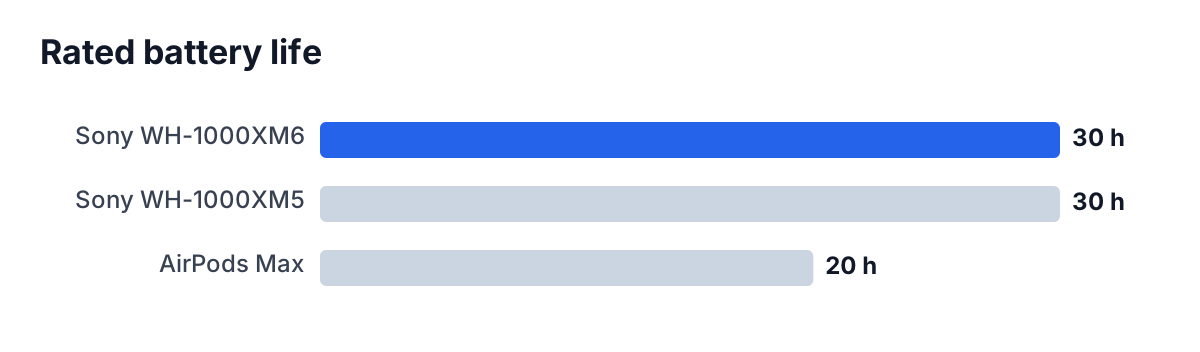
XM5 owners should be more cautious. The XM6 does not reset the battery conversation because Sony still rates both models at 30 hours with noise cancelling on, so the upgrade is mostly about ANC hardware, portability, and the expanded EQ.
Key specs at a glance
| Spec | Sony WH-1000XM6 | Sony WH-1000XM5 |
|---|---|---|
| Noise-cancelling microphones | 12 | 8 |
| ANC processor | QN3, 7x faster than QN1 | QN1 |
| Rated battery life (ANC on) | 30 h | 30 h |
| App equalizer | 10-band | 5-band |
Noise cancelling and microphone array
QN3 processor and the 12-mic array
Sony’s headline change is the QN3 processor, which it says is 7x faster than the QN1 in the WH-1000XM5. That matters because noise cancelling is a real-time job: more processing headroom gives Sony more room to react to changing cabin noise, station announcements, and office chatter without waiting for the sound to become obvious first.
The microphone count also climbs to 12, up from 8 on the XM5. That does not automatically mean every listener will hear a dramatic jump in silence, but it does show where Sony spent the update budget. Compared with the older model, the XM6 is built around more sensing and faster response rather than a big redesign of the acoustic shell.
For buyers who care most about ANC, that is the right sort of upgrade. The WH-1000XM6 is still a closed-back headphone, so passive isolation remains part of the equation, but the new processor is the more important reason to choose this model over the XM5.
Six microphones actually handle calls
The marketing number and the call number are not the same thing. Sony advertises 12 microphones in the noise-cancelling system, while SoundGuys describes a 6-mic beamforming array for voice calls.
That distinction is useful because buyers often assume a bigger mic count always means better calls. Here, the better reading is simpler: Sony has built a system that dedicates some microphones to noise sensing and some to voice pickup. For work calls and airport check-ins, that is the sort of architecture that should help, but it is not the same as saying all 12 mics are used for your voice at once.
Sound quality and codecs
Measured sound signature
RTINGS describes the WH-1000XM6 sound as warm, with bass emphasized by 5 dB and treble sitting at -1 dB. That lines up with the usual Sony house sound: a little extra low-end energy, enough top-end restraint to avoid glare, and a presentation that should stay easy to listen to for long stretches.
The upside of that tuning is obvious for commuting. A warm headphone can make compressed streaming tracks less fatiguing, and the XM6’s 30 mm drivers and wide active-response range give Sony enough room to keep the profile lively without pushing into harshness. The downside is just as familiar: listeners who want a flatter, studio-leaning balance will probably still see the XM6 as a consumer-tuned headphone rather than a neutral reference tool.
SoundGuys and RTINGS are broadly aligned here. Neither source suggests that the XM6 is a radical departure from Sony’s older tuning philosophy. Instead, the evidence points to refinement: the same general shape, but paired with better control from the new ANC platform and Sony’s processing stack.
Codecs, DSEE Extreme, and spatial modes
On paper, the XM6 covers the standard premium Bluetooth codec set: SBC, AAC, LDAC, and LC3. That matters because it keeps the headphone broadly compatible across Android and iPhone, even though the highest-quality path still depends on the source device and app support.
Sony also lists DSEE Extreme support, which is its upscaling feature for compressed audio. Some readers will never touch it, but for streaming listeners with a lot of older files or lower-bitrate playlists, it is part of the XM6’s software pitch. Audio46 also notes a Cinema Mode spatial option, which is another reminder that Sony is leaning on processing as much as hardware.
Taken together, the codec and feature list support the same buying logic as the hardware story: the XM6 is not trying to be the most minimalist headphone on the market. It is trying to be the most capable Sony flagship for people who value convenience, flexibility, and strong ANC in one package.
Battery and charging
Rated vs measured: why the numbers differ
Sony rates the WH-1000XM6 at 30 hours with noise cancelling on and 40 hours with noise cancelling off.
Independent testing comes in a little higher. RTINGS measured 31.75 hours with ANC enabled, and SoundGuys reported 37.23 hours in its standardized battery test.
That spread is not unusual. Manufacturer ratings are one kind of number, while lab tests are another, and the exact result depends on volume, codec, noise-cancelling load, and the test method. The useful takeaway is that the XM6 does not look like a battery-life downgrade, but neither does it deliver a dramatic jump over the XM5’s 30-hour rated figure.
Fast charging helps more than the raw rating does. Sony lists a 3.5-hour charge time, and SoundGuys says a 3-minute top-up can deliver 3 hours of listening. That makes the XM6 forgiving for last-minute travel, but it does not change the core comparison with the XM5: the battery story is stable, not transformative.
Design, comfort, and portability
Folding earcups and the magnetic-clip case
The most visible design change is folding earcups, which return the XM6 to a more compact travel shape. Sony’s support page lists the model at 8.96 oz, while SoundGuys records 254 g, so the headset stays in the lightweight range for a flagship over-ear ANC model.
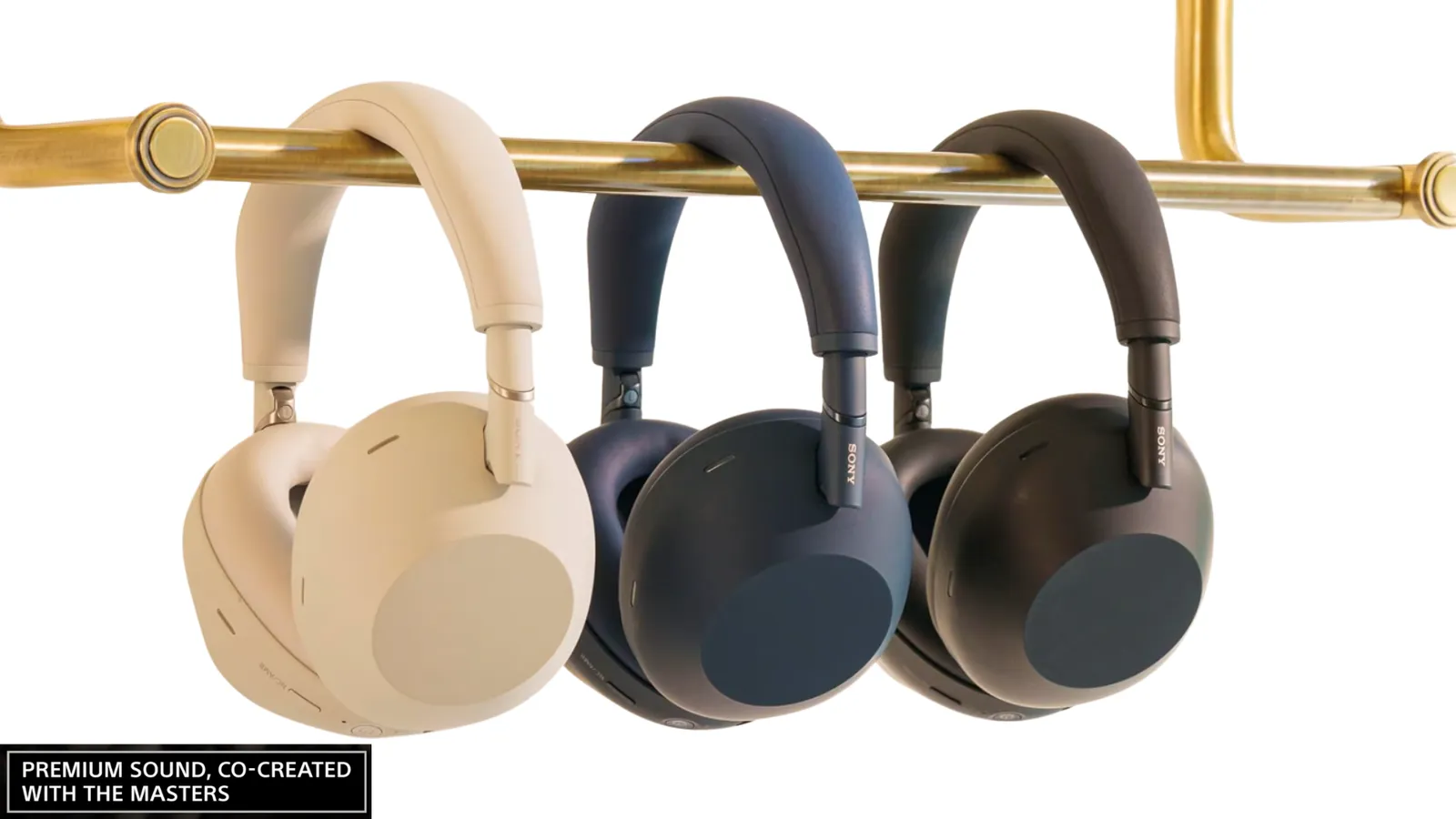
Sony also offers the XM6 in five colorways, including Black, Midnight Blue, Platinum Silver, Sand Pink, and Sandstone. That is not a performance feature, but it does show that Sony expects the headphone to sit on the head and in carry-ons all day, not just in a desk drawer.
The case matters too. Audio46 says the new carrying case opens with a magnetic clip instead of a zipper. That sounds small, but for frequent travelers the box often determines whether a headphone feels premium in use or merely premium in the spec sheet. A quicker-opening case pairs well with the folding cups and makes the XM6 easier to stash during security checks, gate changes, and hotel arrivals.
One missing detail still stands out: there is no ingress-protection rating. That does not make the headphone fragile, but it does mean buyers should not treat it like a sweat-proof sports model or a rain-ready commute tool. The WH-1000XM6 is built for travel and office use first.
Sony WH-1000XM6 vs WH-1000XM5: which should you buy?
The XM6 is the better buy for new shoppers who want Sony’s newest ANC stack, folding earcups, and a more adjustable EQ in a single flagship. The 12-mic design and QN3 processor are the reasons to move up, not the battery rating.
The XM5 still makes sense for owners who already have it and are happy with 30-hour battery claims on both models and a smaller control tweak. In plain terms, the XM6 feels like an upgrade in polish, not a wholesale reinvention.
Shoppers choosing between the XM6 and the Bose QuietComfort Ultra should decide what matters more: Sony’s warmer tuning and stronger update cycle, or Bose’s different take on premium ANC. On Sony’s side, the recommendation is straightforward. If you want the best current 1000X model, buy the XM6; if you already own the XM5 and do not care about folding cups or the 10-band EQ, keep it.
Verdict
The Sony WH-1000XM6 is an excellent premium ANC headphone and an easy recommendation for frequent flyers, commuters, and buyers starting fresh in the flagship class. Its strongest gains are the QN3 processor, the 12-mic array, and the return of folding earcups.
It is a weaker upgrade for XM5 owners because the rated battery life stays at 30 hours with ANC on and the core Sony sound signature remains familiar. The XM6 improves the experience, but it does not redefine it.
For most readers, that is still enough. If your priority is noise cancelling first and travel convenience second, the WH-1000XM6 is the Sony headphone to buy. If you already own the XM5 and are hoping for a bigger leap, this is more of a refinement than a reset.