AstroAI is the better cordless inflator for a trunk kit because it is self-contained, while DeWalt is the smarter buy only if you already own the matching battery platform.
Verdict: which cordless inflator should you buy?
Buy AstroAI if you want a true emergency inflator that can stay in the car. Its built-in battery and 4.13 lb weight make it easier to leave in the trunk than a tool-platform inflator that asks more of the buyer.
Buy DeWalt if you already own 20V MAX batteries and want one tool that can also run on 12V DC or 110V AC. The bare-tool packaging means the real cost rises quickly for anyone starting from zero because the battery and charger are not included.
DeWalt also brings a broader garage-tool feel with high-volume inflation and deflation modes, a built-in LED light, heavy-duty rubber feet, and a 3 Year Limited Warranty. Those are useful extras, but they do not change the core decision for a roadside kit.
Quick comparison: AstroAI vs DeWalt
| Criterion | AstroAI | DeWalt |
|---|---|---|
| Power options | 12V DC plus 20V Lithium Battery | 20V MAX battery, 12V DC, 110V AC |
| Inflation control | automatic shut off plus real-time monitoring screen | high-pressure inflation mode with automatic shutoff |
| Portability | 4.13 lb | Not stated by the maker |
| Hose and reach | 19.7 in hose and 9.84 ft DC cable | Included 12V DC powercord plus tapered nozzle, Presta adapter, and inflator needle |
| Ownership friction | built-in battery and one-hour fast charging lithium-ion battery | battery and charger not included |
AstroAI cordless inflator: best for trunk storage
Why the compact battery-first design works
AstroAI makes sense when the inflator needs to disappear into a trunk and still be ready when the car is already sitting on the shoulder. The product page lists a 6.69 in x 3.15 in x 9.45 in footprint and a 4.13 lb body, which is compact enough to stay out of the way without becoming hard to reach.
The power story is equally straightforward. AstroAI lists 12V DC and a 20V Lithium Battery as power supply options, and it adds automatic shut off plus a real-time monitoring screen. That combination matters more in a roadside kit than a long feature list because the buyer wants fewer moving parts and fewer setup steps.
MotorTrend’s independent testing adds a useful reality check. It reported that AstroAI could top off four tires from 25 psi to 35 psi in one session without a recharge, and it logged an average of 4:31 for 25 psi to 35 psi. That is not a garage-compressor pace, but it is enough to keep a stranded driver moving.
What the built-in battery and display add
The built-in battery changes the whole ownership feel. Instead of managing a separate tool battery, the buyer gets one unit that can live in the car and still charge back up in about an hour. That is the kind of convenience that matters when the goal is emergency readiness rather than workshop throughput.
AstroAI’s published 160 PSI ceiling and 22 L/min airflow also tell a useful story. The inflator is built for ordinary car-tire work, not for replacing an air compressor in a shop.
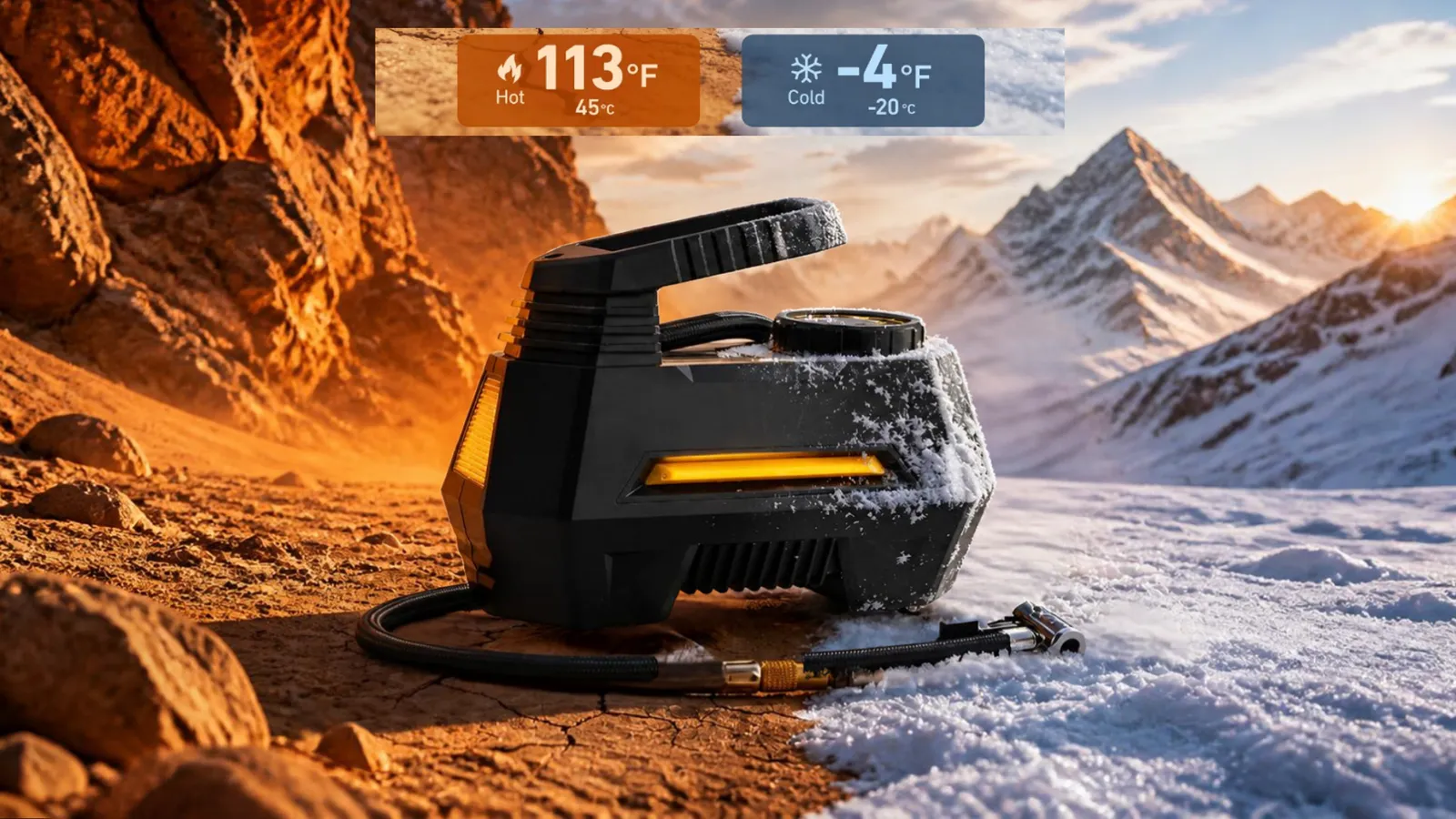
Its hose and cable are worth noting too. The hose is 19.7 in, and the DC power cable is 9.84 ft, which gives the user enough reach to handle a tire without moving the whole unit around constantly. AstroAI also publishes a working temperature range of -20 C to 60 C, which supports the idea that it belongs in a car kit rather than on a benchtop.
DeWalt cordless inflator: best for power-tool owners
Three power sources and useful extras
DeWalt is the more flexible tool. It can run on a 20V MAX battery, 12V DC, or 110V AC, so it moves between driveway, garage, and vehicle without much friction. That is the right setup for a buyer who already lives inside the DeWalt ecosystem.
The feature set leans into that platform logic. DeWalt adds high-pressure inflation mode with automatic shutoff, high-volume inflation and deflation modes, a built-in LED light, and heavy-duty rubber feet. For garage users, that reads like a real tool rather than a panic-kit accessory.
The included accessories help too. DeWalt ships with a 12V DC powercord, a high-pressure tapered nozzle, a Presta valve adapter, and an inflator needle. Those extras make it useful for bikes, sports gear, and general shop work, not just car tires.
Why the bare-tool cost changes the verdict
The catch is the same one that keeps DeWalt from winning the trunk test. The battery and charger are not included, so the buyer has to own the platform already or spend more to get there. That can be fine in a workshop, but it is awkward in an emergency kit.
DeWalt does offset that with a 3 Year Limited Warranty and a design that feels made for repeat use. Still, the value equation depends on whether the buyer is starting from scratch or just adding another tool to an existing battery shelf.
Which one fits your use case?
AstroAI is the better answer for most drivers who want one inflator that can stay in the trunk and be ready when needed. The built-in battery, the 4.13 lb weight, and the compact body all work in favor of emergency storage.
DeWalt wins when the buyer already owns 20V MAX batteries and wants a more flexible inflator for the garage. Its ability to run on 12V DC or 110V AC, plus the accessory bundle and warranty, make it the better all-around tool once the battery hurdle is gone.
If the goal is the simplest trunk backup, AstroAI is the one to buy. If the goal is a more versatile inflator for a power-tool owner, DeWalt is the smarter second choice.