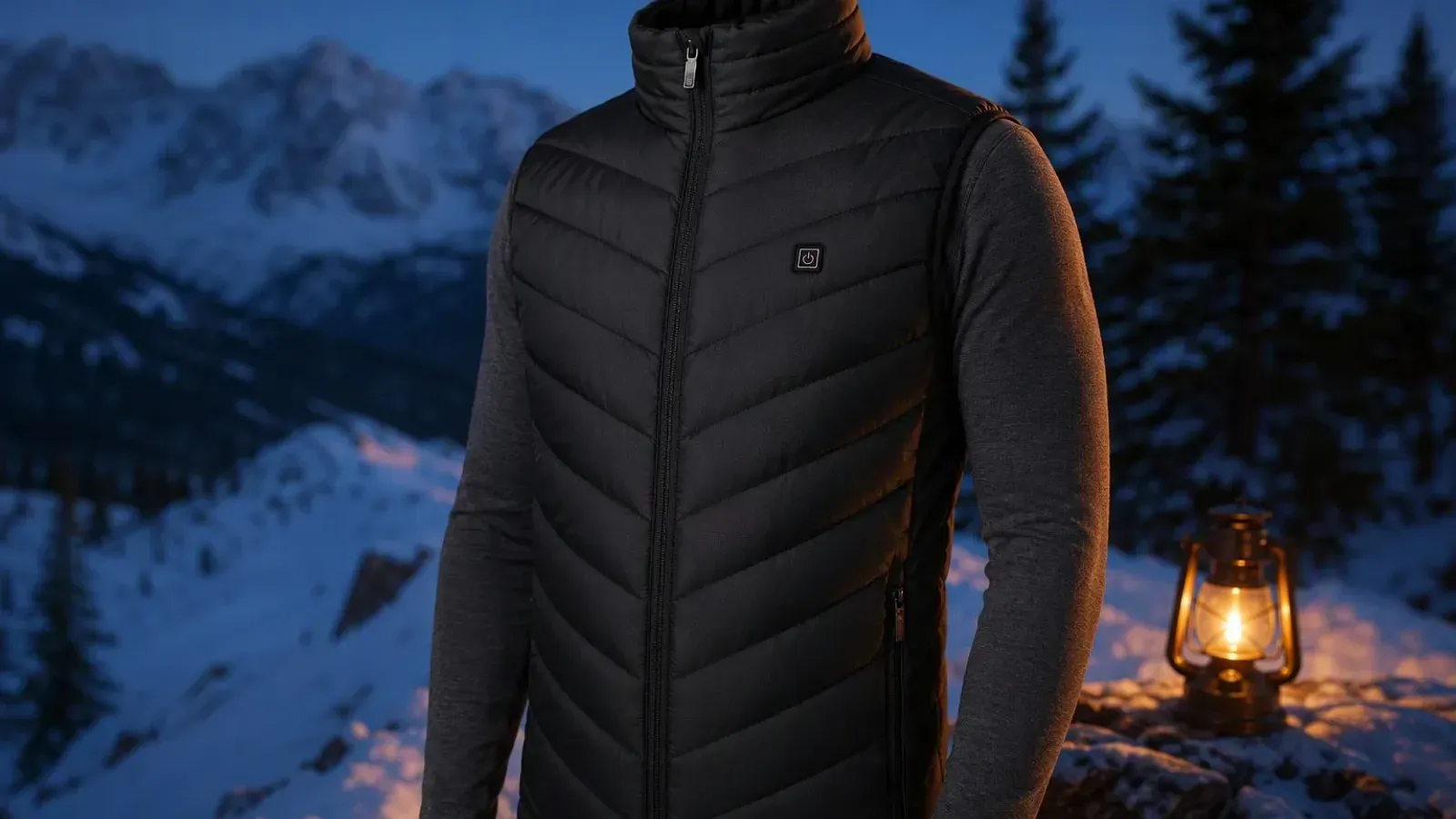
Hotjak is the best budget-flex pick here: it uses 4 heating pads across 3 heat settings, reaches top temperature in about 3 seconds, and can run for about 7 hours on low.
Which heated vest should you buy?
Fast answer
Hotjak is the vest for buyers who want flexibility instead of a bundled battery. The heat output is straightforward, the size range is broad, and the power setup stays simple if the buyer already owns a compatible 5V power bank.
| Product | Heat / control | Battery / runtime | Key materials / fit |
|---|---|---|---|
| Hotjak Heated Vest | 4 heating pads, 3 heat settings | About 7 hours on low, 4-5 hours medium, 3 hours high; battery sold separately | XXS to 4XL, water and weather-resistant, machine washable, TSA-friendly |
| ORORO lightweight heated vest | 4-zone layout | 7.38V 4800mAh USB-C battery; up to 10 hours | Machine washable; nylon shell; polyester lining and filling |
| Fieldsheer Peak BT Heated Vest | MW Connect app control, 4 heat levels | Not stated by the maker | Water-resistant exterior for light rain and snow |
| Fieldsheer Backcountry Xtera Heated Vest | 3-zone heating system, 4 heat levels | Not stated by the maker | Windproof shell and rugged outdoor design |
| Fieldsheer Foreman work vest | Jobsite-oriented build | Not stated by the maker | Cotton canvas shell, quilted thermal liner, interior zippered pockets |
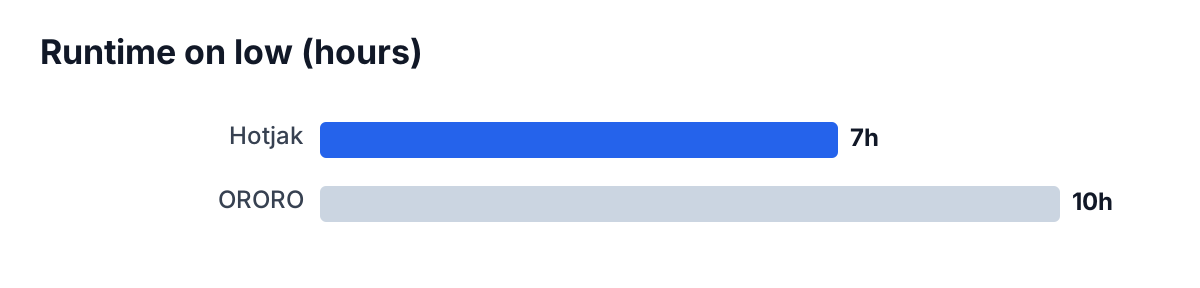
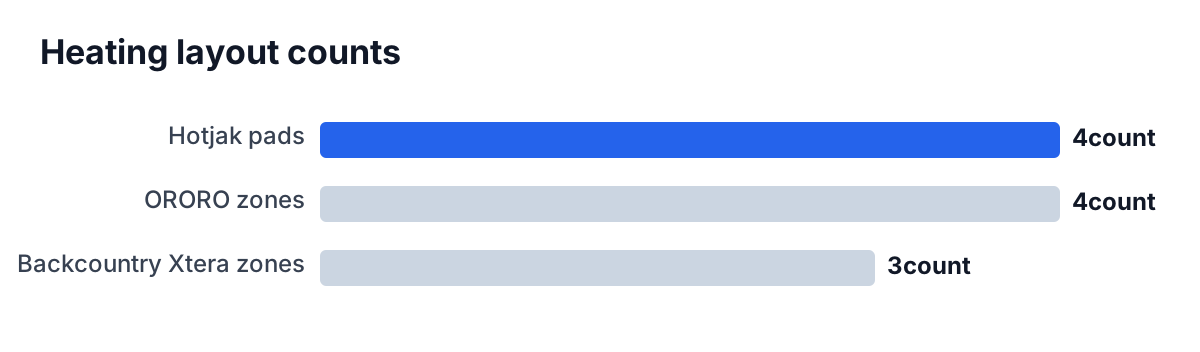
Two quick charts show the shortest comparisons at a glance.
How the shortlist was built
The shortlist focuses on the decisions that change the buying choice: whether the battery is included, how long the vest runs, how much control the buyer gets over heat, and whether the fabric and fit make sense for winter layering. That is why the comparison separates battery setup from heating layout instead of blending them into one generic score.
More Fitness & Outdoors reviews live in the Fitness & Outdoors hub.
If the buyer wants the most flexible budget pick and can supply a compatible 5V power bank, Hotjak is the one to start with.
Hotjak heated vest: best budget-flex pick
Hotjak is the most adaptable option in the group for shoppers who want warmth without committing to a proprietary battery. The vest covers a wide range of bodies, and the spec sheet makes it clear that the fit and care story are part of the appeal as much as the heat output.
Hotjak’s size range runs from XXS to 4XL, the outer fabric is water and weather-resistant, and the vest is machine washable. It is also TSA-friendly, which makes it easier to pack for trips when the buyer wants one heated layer that can travel without extra drama.
The main tradeoff is battery ownership. Hotjak is sold without the battery in the base purchase, so the buyer needs to plan for power separately even though the vest works with any compatible 5V power bank. That is not a deal-breaker, but it does mean the purchase is more flexible than turnkey.
Hotjak is also the model in this group with the strongest value argument for shoppers who already have a power bank. The vest reaches top temperature in about 3 seconds, so the buyer is not giving up fast response just because the battery is not bundled.
ORORO lightweight heated vest: best everyday layer
ORORO is the cleanest everyday pick because the battery is already part of the package. That makes the vest easier to understand at checkout and easier to recommend for buyers who want a low-friction layer they can pull on for commuting, errands, and routine winter wear.
The vest uses a 4-zone layout and ships with a 7.38V 4800mAh USB-C battery, with runtime rated up to 10 hours. The shell is nylon, while the lining and filling are polyester, and care stays simple because the vest is machine washable.
Compared with Hotjak, ORORO trades some budget flexibility for a more turnkey setup. The buyer gets the battery story solved up front, which matters more than chasing the absolute lowest entry price for people who want to wear the vest often.
If the buyer wants an everyday layer with the battery already included, ORORO is the safer buy.
Fieldsheer picks for control, ruggedness, and work
Fieldsheer’s lineup answers the buyers that the other two vests do not fully cover. One option leans into app control, one leans into weather protection and rugged outdoor use, and one leans into workwear materials and pocket storage.
Peak BT for app control
Peak BT is the most software-driven choice in the group. MW Connect app control lets the buyer fine-tune the temperature from a phone, and the vest offers 4 heat levels, so the interface is built for people who want more than a basic button press.
The shell is also water-resistant, which helps in light rain and snow. That makes Peak BT a sensible option for commuters and casual outdoor users who care about convenience and weather protection in the same vest.
If smartphone control matters more than battery length, Peak BT is the Fieldsheer pick to look at first.
Backcountry Xtera for rugged outdoor use
Backcountry Xtera is the tougher-feeling outdoor option. Its 3-zone heating system still gives the buyer layered warmth, but the bigger selling point is the windproof shell and rugged outdoor design, which point to colder, more exposed use.
The heat control is still practical because the vest offers 4 levels of heat, so the buyer does not have to give up adjustability to get the sturdier shell. That balance makes Backcountry Xtera the better fit for someone who wants a vest that feels ready for real weather rather than just a short walk from the car.
Foreman 2.0 for jobsite wear
Foreman 2.0 is the workwear answer. The cotton canvas shell and quilted thermal liner give it a more durable, utility-first feel, and the interior zippered pockets make it easier to carry small essentials on the job.
This is not the most minimal or the most tech-forward vest in the group. That is the point: the Foreman model is for buyers who care more about storage, rugged materials, and a work-ready build than about app control or the lightest everyday layer.
What to compare before you buy
Heating zones and controls
Hotjak, ORORO, and Fieldsheer all take different routes to warmth. Hotjak uses 4 heating pads and 3 heat settings, ORORO uses a 4-zone layout, and Fieldsheer’s options split between app control and simpler button-based heat levels.
The right choice depends less on the raw count and more on how the buyer plans to wear the vest. Someone who wants the simplest winter layer will probably prefer ORORO. Someone who wants a lower-cost vest that still responds quickly will lean Hotjak. Someone who likes fine control from a phone will prefer Peak BT.
Battery/runtime and power-bank compatibility
This is the budget question that separates the best value from the easiest purchase. Hotjak requires a separate battery in the base purchase, but it works with any compatible 5V power bank; ORORO includes its own 7.38V 4800mAh USB-C battery and is rated up to 10 hours.
Fieldsheer does not publish runtime figures for the Peak BT, Backcountry Xtera, or Foreman, so treat the control and shell details as the known quantities and look for a runtime number before deciding. When the runtime is missing, the safest move is to buy for use case first and power expectations second.
Fit, fabric, and care
Hotjak is the broadest fit story in the group, with XXS to 4XL sizing and a machine-washable build that can handle normal winter use. ORORO also keeps care simple with machine wash instructions and a nylon/polyester construction.
Fieldsheer’s workwear and outdoor options go in a different direction. The water-resistant Peak BT shell, windproof Backcountry Xtera shell, and Foreman’s cotton canvas plus quilted thermal liner all point to more specialized use rather than one universal fit.
Verdict
Hotjak is the best heated vest pick for buyers who want flexibility, broad sizing, and a lower-friction value story if they already own a compatible power bank. ORORO is better for anyone who wants the battery included and prefers a simpler everyday layer.
Fieldsheer’s Peak BT is the right answer for app-control shoppers, Backcountry Xtera is the more rugged outdoor choice, and Foreman is the workwear option with the strongest storage angle. The verdict would change only if a verified runtime number appeared for the Fieldsheer models and shifted the value balance.